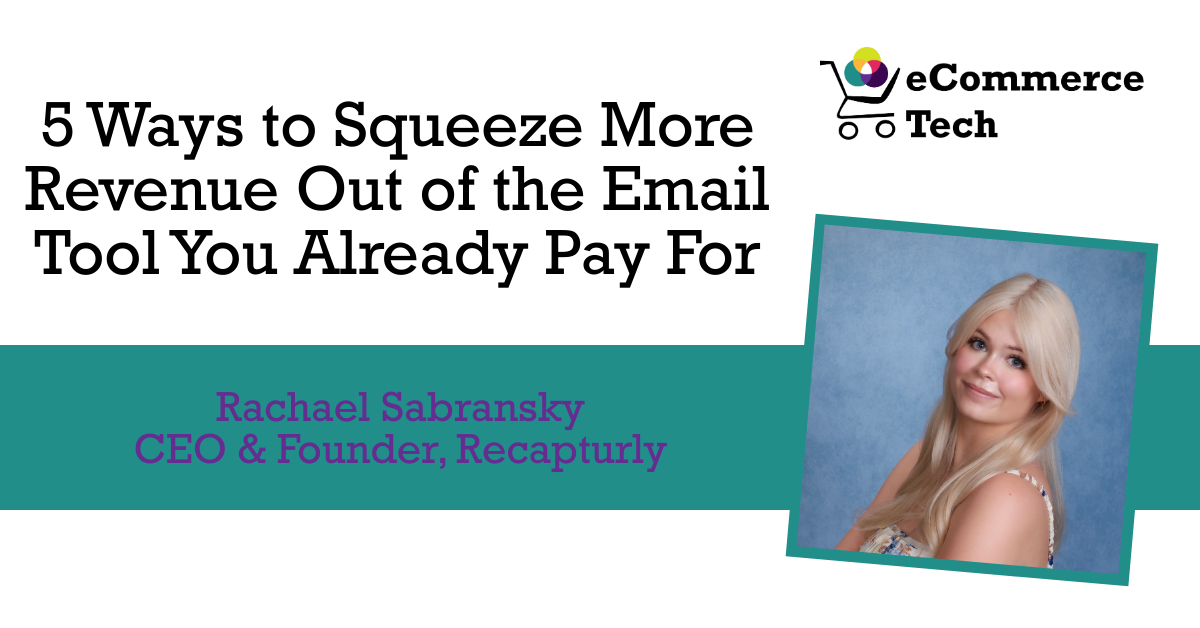

Every week, I talk to store owners who are convinced their email platform is the problem. The flows aren't converting, the list isn't growing, revenue is flat, so surely it's time to switch tools.
Nine times out of ten, the tool is fine. It's just barely being used.
Most eCommerce stores run their email platform like a very expensive newsletter machine. They send campaigns, maybe they have a basic abandoned cart email, and that's it. Meanwhile, the subscription they pay for every month includes automation, segmentation, and analytics features that never get switched on.
Before you add "find a new email platform" to your to-do list, work through these five steps. In my experience building email flows for Shopify brands every day, this is where the untapped revenue usually hides.
1. Audit What You're Actually Paying For
Start with an honest inventory. Open your platform's feature list, then go through your account and note which features you actively use. Most merchants I work with are surprised by the gap.
Look specifically for:
- Automation flows you've never built (browse abandonment, back-in-stock, replenishment reminders)
- Segmentation tools sitting unused while every campaign goes to the full list
- A/B testing that's available but never turned on
- Predictive analytics, like expected next-order date or churn risk, that already exist in your dashboard
- SMS or push channels bundled into your plan that you've never activated
You're paying for all of it. The rest of this article is about putting the most valuable pieces to work, but you can't do that until you know what's on the shelf.
2. Build Out the Three Flows Doing the Heavy Lifting
Automated flows are where email revenue actually lives. Automated messages make up a tiny share of total email volume, yet they drive an outsized share of email revenue because they land at exactly the right moment. And most of that comes from just three flows: abandoned cart, welcome, and browse abandonment.
Here's the thing, though: having these flows is not the same as having good ones.
Take abandoned cart, the flow I spend most of my time in. Klaviyo's analysis of over 143,000 abandoned cart flows found the average flow earns around $3.65 per recipient, while top-performing brands earn several times that. The single biggest difference? Sequence length. Three-email sequences dramatically outperform single emails because one reminder is easy to miss and easy to ignore.
Quick upgrades that cost nothing but an afternoon:
- Extend your abandoned cart flow to at least three emails, spaced out over a few days
- Add a win-back flow for customers who haven't purchased in 60 to 90 days, before they're gone for good
- Build a post-purchase flow that does more than confirm the order. Ask for a review, suggest a complementary product, or explain how to get the most from what they bought
None of this requires a new tool. Every mainstream platform can do all of it today.
3. Use the Segmentation You're Already Collecting Data For
Your platform is quietly collecting purchase history, browse behaviour, engagement data, and location on every subscriber. If you're still sending every campaign to your entire list, that data is doing nothing.
Segmentation is consistently one of the highest leverage changes a store can make. Marketers have reported enormous revenue lifts from segmented campaigns compared with batch-and-blast sends, and you don't need anything fancy to get started.
Three segments that take minutes to build:
- Engaged in the last 90 days. Send your regular campaigns here, not to the whole list. Your open rates and deliverability will thank you.
- VIPs. Your top spenders or most frequent buyers. Give them early access and exclusives. They've earned it, and they convert.
- One-time buyers. The biggest growth opportunity on most lists. Target them with content and offers designed to get that crucial second purchase.
Start with these three, learn what works, then get more sophisticated. The point is that the data is already there, included in the price you pay.
4. Do the Deliverability Housekeeping Nobody Wants to Do
This is the least glamorous item on the list and possibly the most valuable. It doesn't matter how good your emails are if they land in spam.
Since Gmail and Yahoo tightened their sender requirements in 2024, authentication has gone from best practice to non-negotiable. Senders with SPF, DKIM, and DMARC properly set up see dramatically better inbox placement than senders without them. If you don't recognise those acronyms, that's fine, but someone on your team needs to check them this week. Your email platform has a setup guide for each one.
While you're in there:
- Confirm you're sending from your own authenticated domain, not the platform's shared one
- Remove or sunset subscribers who haven't opened anything in six months or more
- Check your spam complaint rate is comfortably under 0.3%, the threshold Gmail now enforces
- Make your unsubscribe link easy to find. Hiding it increases spam complaints, which hurts everyone on your list
An afternoon of housekeeping here can quietly lift the performance of every email you send afterwards.
5. Know When You Really Have Outgrown Your Tool
After all that, sometimes the answer genuinely is a new platform. Fair enough. But make it a decision based on real limits, not frustration.
You've probably outgrown your tool if:
- You're regularly building workarounds outside the platform for things competitors offer natively
- Your store's data lives in systems your platform can't connect to, and integrations don't exist
- You've hit hard limits on sends, subscribers, or flows, and the next pricing tier costs more than a better-suited competitor
- Support can't resolve recurring technical problems that are costing you revenue
If you read that list and thought, "Not really, we just haven't set things up properly," you have your answer. Fix the setup first. Then, if you do eventually switch, you'll migrate as a team that knows exactly what it needs, which makes choosing the next tool far easier.
The Cheapest Revenue You'll Find This Quarter
New tools are exciting. Optimising the one you have is not. But the revenue from switched-on flows, basic segmentation, and clean deliverability is real; it compounds every month, and it's already included in a bill you're paying anyway.
Run the audit. Build the three flows. Send to segments. Fix your authentication. Then, and only then, ask whether you need a new tool. Most stores I work with find the answer waiting in the account they already have.