
Your next customer might not be a person.
That sounds dramatic, but it's where product discovery is heading. Shoppers are asking ChatGPT for recommendations. Agents are starting to browse, compare and even buy on people's behalf. And the humans still landing on your site? They've been trained by AI to expect a precise answer to a precise question.
So what should eCommerce brands actually do about it?
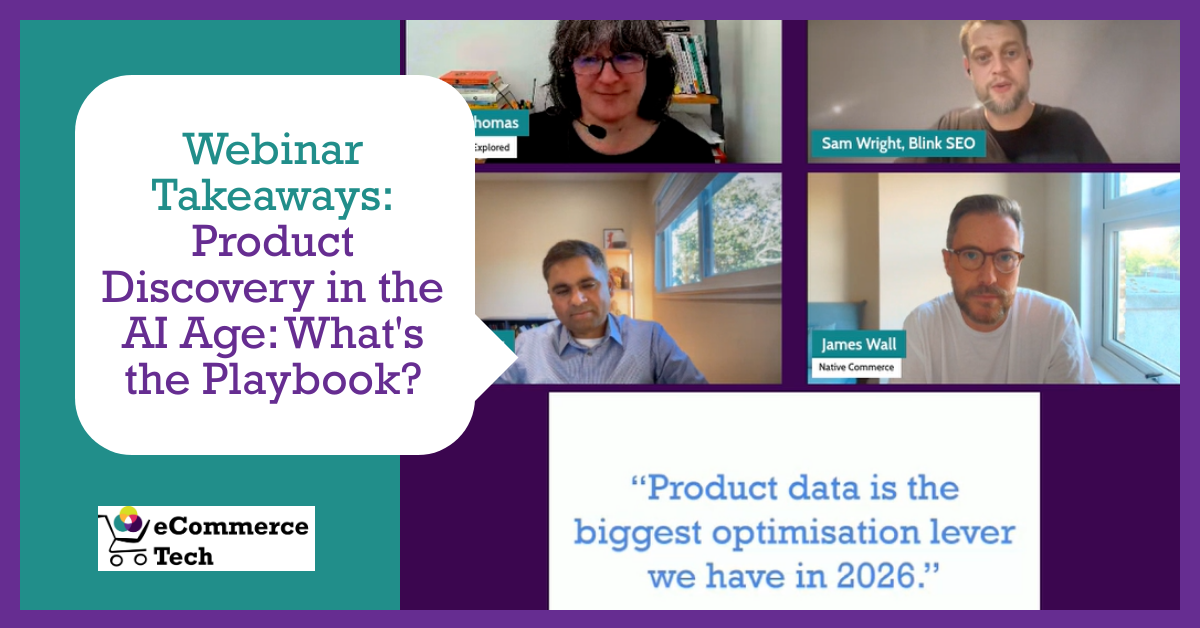
That was the question host Chloe Thomas put to the panel at the latest eCommerce Explored webinar. She admitted early on that product discovery is all she'd talked about for weeks. It's one of the biggest stories in AI right now, and it's one of the few areas where playbooks are starting to take shape. Brands can still make real improvements before this year's peak.
The panel didn't hand over a neat ten-step checklist. They gave something better: a clear view of what matters now, what can wait, and what's coming next.
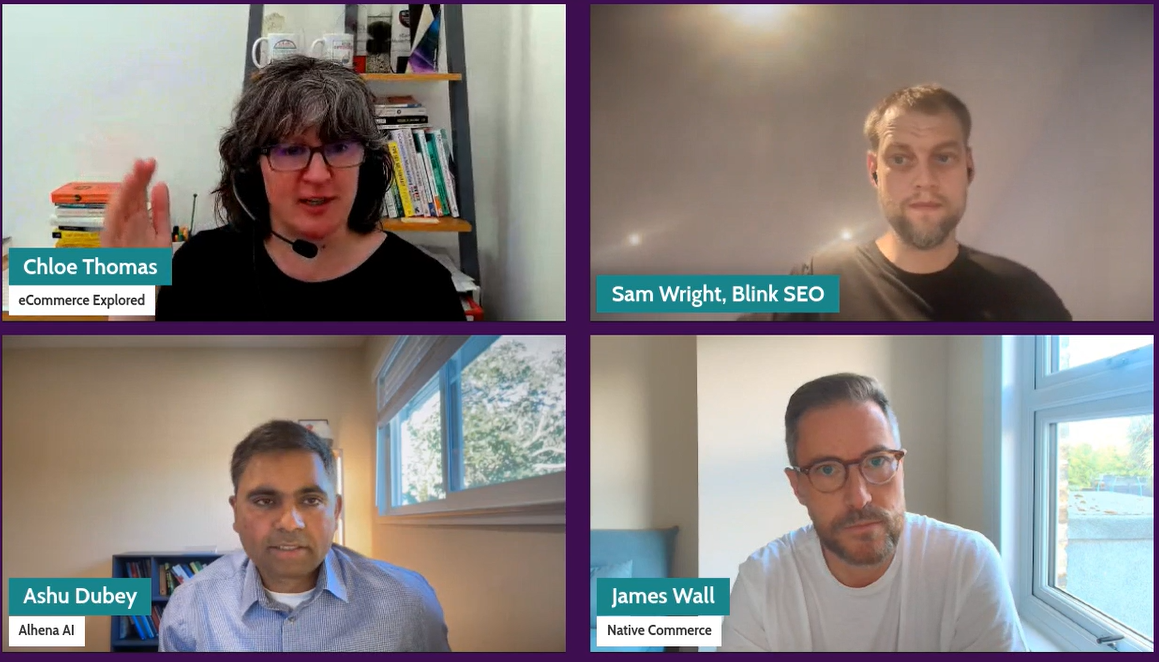
Meet the Panel
Ashu Dubey is Co-founder and CEO of Alhena AI, an AI discovery agent that works both offsite (helping brands show up in ChatGPT, Perplexity and other AI engines) and onsite (an AI shopping assistant that guides customers to purchase). Before Alhena, Ashu led product growth at LinkedIn, including SEO.
Sam Wright is the founder of Blink, an SEO and PPC agency that specialises in large-catalogue Shopify stores.
James Wall is CMO at Native Commerce, an eCommerce accelerator that gives merchants the tools and expertise to grow, from storefront through to fulfilment.
You Now Have Two Buyers: Humans and AI Agents
Chloe opened by asking each panellist what advice they give brands most often. Ashu went straight to the shift in buying behaviour.
"You have two buyers," he said. "One is the agent that is trying to buy on your behalf." Agent traffic is still a small share for most stores, he noted, but it's climbing fast.
Humans are changing too. ChatGPT has conditioned shoppers to type fuller, more specific questions and to expect a precise product recommendation in return. Brands now have to serve both audiences, and both are moving targets.
Ashu gave an example that should make any premium brand pause. Many luxury brands keep their product pages minimal: a few images, maybe a carousel, very little text. Human customers who already know the brand will still buy. An agent won't.
"If they don't know enough about the product, they're not going to recommend," he said.
Product Discovery Starts With Product Data
Sam's answer was the one every other answer kept circling back to: product discovery is built on product data.
He splits it into three areas:
- Hygiene: is the data correct and complete?
- Enrichment: does it carry the detail customers (and machines) need?
- Governance: who keeps it right over time?
Taxonomy sits on top of that. If product data is the list of attributes, taxonomy is how those products get organised across the store.
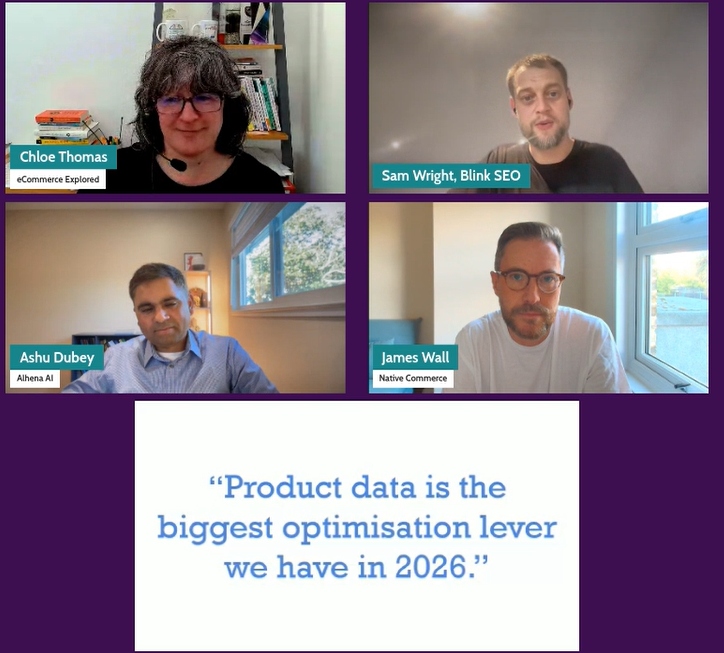
Chloe said product data is the biggest optimisation lever brands have in 2026. Sam agreed. For the established Shopify stores Blink works with (typically $5 million plus in revenue), he said enriching product data can deliver something like a 20% year-on-year uplift without any extra ad spend.
"You're just fixing everything at source and then watching it flow down all of the other channels," he explained.
That's the appeal. Better product data doesn't only help with AI search. It improves Google Shopping, your onsite search, your filters and your feeds all at once. We've covered the practical side of this in our guide to making your products visible to AI shopping agents.
Start With Where You Want to Sell
James offered a useful counterweight. Before thinking about how people discover your product, he asks merchants a more basic question: where do you actually intend to sell and fulfil?
TikTok Shop? A marketplace? Your own site? Each one shapes the structured data you need and how buyers will find you. Discovery, in his view, is the last step, not the first.
Chloe liked this reminder. It's easy right now to get lost in "product data, product data, product data" and forget what the end goal is.
Is Onsite Product Discovery More Important Than CRO?
Chloe put a provocative statement to the panel: successful onsite product discovery is now key to happy customers and good conversion rates.
Ashu sees discovery and conversion as parts of the same funnel. Discovery matters most at the start because visitors arrive with very different intent. Someone clicking through from your email newsletter already has a relationship with you. Someone landing from an ad might just be curious. Discovery has to adapt to both.
But a great first few seconds won't save a weak product page. "If the PDP doesn't have enough information for the users to buy or to make that decision, they will grow cold feet at the last minute," he said.
James pushed back slightly on the "happy customers" part. Happiness depends on much more than finding the product: checkout, delivery speed, operations. Plenty of well-known brands still have poor fulfilment. He agreed on the conversion side, though.
Sam pointed to the classic book They Ask, You Answer. Its core idea is that answering every question a customer might have, openly, supports the purchase. Most of what the panel discussed is that same principle showing up in new places.
The Nuts and Bolts of Onsite Product Discovery
So what tools actually make up onsite product discovery? Chloe listed the obvious ones: site search (moving towards a chat format), proactive and reactive chat, and merchandising personalised by traffic source.
Ashu added quizzes and stressed that each page type needs a different kind of help:
- Homepage: search still does most of the work, but a short quiz can help shoppers narrow things down.
- Collection pages: smarter filters, or a nudge to find the right option, such as the right sofa on a sofa page.
- Product pages: the most common questions answered upfront, plus a box for shoppers to ask their own.
The right setup also depends on catalogue size. As Sam put it, discovery for a pet food brand with 10 SKUs looks very different from a homeware brand with 500,000. If you're reviewing the tech side, our roundup of the best onsite search tools for eCommerce is a good starting point.
Will Agents Really Do the Buying?
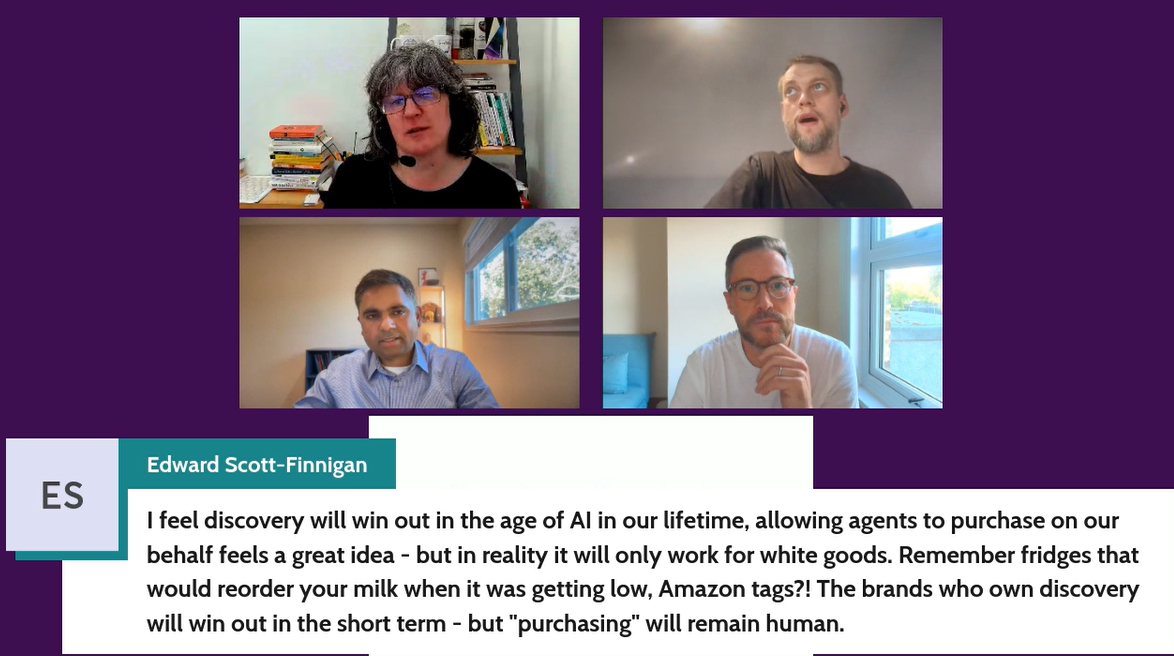
Audience member Edward Scott-Finnigan sent in a statement that started a lively debate. He felt discovery will win out in the age of AI, but agents buying on our behalf will only work for white goods. Remember fridges that reordered your milk? Purchasing, he argued, will stay human.
James's view: it depends on the price point, the category and the shopper. Nobody is letting an agent buy a $2,500 Louis Vuitton jacket on its own. But an agent can recommend one and pick the right size. For tedious, commoditised purchases like the weekly grocery shop, he'd happily hand it over. He also expects adoption to vary by market, with the US and China moving faster than the UK and Europe.
Ashu agreed. Most people won't trust an agent with a $40,000 Rolex, but many already trust Amazon's Subscribe & Save to send them things without a second thought.
His bigger point was this: even when the human makes the final decision, the agent increasingly does the research. Instead of spending 30 minutes comparing bags, a shopper asks an agent for the five worth considering. If your products aren't in that shortlist, you never get the chance.
Chloe summed it up. It doesn't matter what share of the journey the AI handles. Brands need to give agents the right data so that however much they're involved, they lead the shopper to the right product.
For Shopify merchants, Sam noted, a lot of the infrastructure is being handled for them. Shopify is building much of the plumbing for agentic commerce, including the Universal Commerce Protocol it developed with Google, and its own product catalogue. For most brands, the job is still to get the product data right and run a good store.
The Product Data Advantage Won't Last Forever
Ashu then added some spice. He agreed product data is the biggest lever for 2026, but he doesn't think it stays that way.
Right now, most brands are enriching their data by adding attributes, meta tags and FAQs, usually with AI tools doing the heavy lifting. By late 2027, he suspects the agents doing the discovery will simply enrich the product data themselves. "I have a strong hunch this is going to change dramatically," he said.
Chloe pointed out the irony: agents feeding agents, with everything slowly becoming the same.
So what will set a brand apart?
Why Storytelling Beats Meta Tags
James answered with a cautionary tale. Someone in the AEO world put out a press release crowning themselves "the king of AEO". The AI engines started repeating it. Others then tested the theory by doing the same, and it worked for them too.
Left alone, agents just repeat whatever they pick up. That's why James believes a brand's own data, customer reviews and storytelling matter as much as structured data. He pointed to Nothing, the tech company, which builds its whole story around being the opposite of Apple rather than relying on specs.
Ashu agreed this is where the competition will move. "Everyone is gonna do the meta tags anyways," he said. "What's gonna differentiate the brands is the story." The open challenge is how to tell that story to an agent.
Sam explained how Blink is already tackling this. Enrichment goes beyond basic attributes. It means turning persona-led insight into data that AI can read. Much of that insight lives in your team's heads and has never been written down. Blink runs market research to find out what shoppers expect, what frustrates them about similar brands, and which trust signals they look for, then turns those answers into product attributes.
"Having data that no one else has is your competitive advantage," Sam said. And the best source of that data? Customer support tickets and real conversations with customers.
What to Do Before Black Friday
With the session taking place on 30 September, Chloe asked what brands can still do before peak. The answers were refreshingly practical.
Ashu: fix the technical basics and speak your customers' language. This is likely the first Black Friday where brands will see how much shopping agents are really doing. Check crawlability, make sure you're not blocking AI agents, and tighten your data. Don't start a big enrichment project now unless you have a partner who can move fast.
The quick win he's seen deliver the biggest lift is rewriting product page copy around how customers actually search. Shoppers don't ask about fabric weight. They ask whether a shirt works for a wedding. Agents can work out the specs themselves, but they need you to tell them which use cases a product suits.
He also shared a figure worth acting on. In A/B tests, simply adding a product FAQ and a box where shoppers can ask questions has driven 6 to 8% incremental revenue. "That's the kind of thing you can do on day zero," he said.
Sam: tackle quick hygiene wins. You don't need a full data project to make sure your GTINs (barcodes) sit in the right field in Shopify, and plenty of brands still haven't done it. He also recommends building a Black Friday taxonomy, with your deals broken into subcategories. It's quick, and it helps both SEO and Google Ads.
James: take a position. Decide how you want buyers to engage with your brand during peak, and make sure fulfilment and operations are ready for the rush. He also likes brands that go against the grain: no Black Friday discounts, or the same fair price all year. As Chloe said, you don't have to do Black Friday. Some of Ashu's clients finish their sales by September.
Need more peak ideas? Browse our Black Friday eCommerce advice round-up.
So, What's the Product Discovery Playbook?
To finish, Chloe asked each panellist for their bigger-picture advice.
Ashu: Set realistic expectations for AI search. Traffic from ChatGPT and similar engines is still in the low single digits for most brands, and nobody knows which platform will win. Don't over-optimise for one channel. Get the technical basics right offsite, then put your energy into onsite. Give human shoppers a more agentic experience: conversational search, a more consultative sales journey, and product pages that answer real questions. That's where the biggest return is over the next 6 to 12 months.
James: Pause and get clear on your intent. Where do you want to sell? Then work backwards to how customers will find your product on each channel. TikTok discovery is not marketplace discovery. Along the way, you might even spot a sales channel you'd missed.
Sam: Look at how much of your revenue really depends on product discovery. For many of Blink's clients, feed-based channels like Google Shopping, organic shopping and AI make up 60 to 70% of revenue, before you count SEO, which product data and taxonomy also shape. If that's you, optimising discovery is your biggest lever.
Watch the Full Session
There was more in the conversation than we could fit here, including whether the next Amazon-sized platform will be built purely for agents, and with no website at all.
Watch the full webinar replay on YouTube.
Join Our Next eCommerce Explored Webinar
Want to get your questions answered live by experts like these? Sign up for upcoming eCommerce Explored webinars.
Thanks to our session sponsor, Alhena AI, the AI discovery agent helping brands get found in AI search and convert more shoppers on site.